One of my favorite lines from a 1988 movie called Beaches: “But enough about me, let’s talk about you… what do YOU think of me?”
Work Life

I joined the University of Miami Miller School of Medicine (UMMSM) in January 2024 after working for the University of Illinois College of Medicine (UICOM) in Chicago for 10 years. I am currently based in Miami, FL. Some of my professional experiences and interests include instructional design, educational technology, management, leadership, and librarianship.
If you want to know more about my personal life, check out Up Close and Personal.
In my current role as Director, Curriculum at UMMSM, I work directly with the Associate Dean for Curriculum (ADC) and the Associate Dean for Medical Education and Administration (ADMEA). I have oversight of administrative operations of the UMMSM curriculum and am responsible for the execution of decisions made by the ADC and the ADMEA regarding the curriculum. I am directly responsible for the day-to-day administration, supervision, coordination, operation, and support of continuous quality improvement of the Office of Medical Education. I work closely with deans, faculty, staff, external contacts, and students to support the operational management of the curriculum and will help ensure that all systems, procedures, and policies follow UMMSM and University academic policies and procedures as well as the AAMC Liaison Committee on Medical Education (LCME) accreditation standards. I am also responsible for office budgeting and the educational activities throughout all four years of undergraduate medical education. I lead a group of fantastic program managers and assess individual and organizational performance and make improvements as needed.
My role at UMMSM has altered my career path slightly. My initial projects include:
- Reorganizing and reimagining how SharePoint is used at the college
- Become an expert in using Elentra, our learning management system
I intend to bring some of the quality assurance and quality improvement aspects I implemented at UICOM to UMMSOM.
While my newest role at UMMSM is not focused directly in instructional design, I’ll share a bit about my experience with getting into the field. I began my formal career as an instructional designer in 2013 when I was the first person to be hired as (the only) instructional designer role at UICOM. In 2018, I was promoted to be the first-ever Director of Instructional Design and Learning Innovation at UICOM. This was a new role created specifically with me in mind. In this role, I worked closely with faculty to design, plan, and evaluate the curriculum. I led a regular series of workshops designed to create stronger communities of teaching and learning. I left UIC in January 2024 and retain an appointment as adjunct assistant professor in the Department of Medical Education, the oldest and largest such department of scholarly research in medical education in the world. At UMMSM, I work with the senior instructional designer and his team to improve our learning management system usage and establish best practices in the design and delivery of curricular content.
My focus is mainly in medical education though I have experience in many subject areas in traditional higher education, non-profit, and corporate environments. I have designed and developed instructional methods and curriculum in different formats (e.g., face-to-face, hybrid, blended, fully online – synchronous and asynchronous) for a wide variety of learning styles.
I have more than 15 years of experience collaborating with faculty and other subject-matter experts (SMEs) in academic medicine employing a wide variety of instructional design theories, frameworks, models, and processes including: the Unified Theory of Acceptance and Use of Technology (UTAUT), ADDIE, SAM, Quality Matters, Gagné’s Nine Events, and Mayer’s Multimedia Learning Model.
Instructional Design
The term instructional design refers to the systematic development, delivery, and evaluation of effective and engaging learning products and experiences with which to motivate learners toward specific learning outcomes. As an instructional designer, I begin by identifying where there are opportunities to improve skills and performance among a targeted set of learners. This is followed by the design and implementation of learning experiences that meet these opportunities by building courses, instructional manuals, tutorials, workshops, simulations, and more.
It is imperative that we as instructional designers work to create learning experiences that motivate learners and that foster deeper and more meaningful levels of skills development and knowledge transfer and retention.
I asked Claude.AI to ‘”‘describe the role of an instructional designer in the form of a poem.’ Here is what I got in return:
In the realm where learning meets design,
Sits a creator of paths sublime,
Weaving knowledge with careful thought,
Building bridges where skills are taught.
With learning theories as their guide,
And technology at their side,
They craft experiences that flow,
Help understanding deeply grow.
From needs assessment to the end,
Each module carefully they tend,
Breaking complex ideas down,
Making learning smooth, not a frown.
Through multimedia they create,
Engagement they orchestrate,
With assessments fair and clear,
Making learning goals appear.
They partner with the subject wise,
To transform content and revise,
Until each lesson stands complete,
Where objectives learners meet.
In virtual worlds or classroom space,
They set learning’s perfect pace,
The instructional designer’s art:
Making wisdom take its start.
Sounds about right!
An important aspect of my work is to use evidence-based pedagogical research and practices to ensure a positive experience for the learner. There are many theories and models in the ID world. Here are some of them:
- ADDIE Model
- Elaboration Theory
- Inquiry-based Learning
- Merrill’s Principles of Instruction (I have met David Merrill a few times – very great guy!)
- SAM & SAM2
- Sociocultural Learning Theory
- Situated Cognition Theory
- Unified Theory of Acceptance and Use of Technology (UTAUT)
Implementing Instructional Design in Academic Medical Education
When I was an ID director at UICOM, I design solutions that are functional, attractive, and appealing to the end-users – the medical students, staff, and faculty. I established problem-solving procedures to aid in making informed decisions about curricular design. Instructional technologists (ITs) help facilitate educators’ use of various technologies that they need to accomplish their jobs. It is certainly realistic that one can have either title and the capacity to have both skill-sets. There is a lot of overlap between the two.
I worked closely with the faculty at our three campuses of UICOM (Chicago, Peoria, and Rockford). I brought my vast experiences in learning theories, online teaching methodologies, learning management systems, and creative ways to incorporate effective web tools and technologies to engage the students and hopefully enhance instructional experiences. Medical education draws on the following disciplines: physical, human and biological sciences, humanities, social / behavioral sciences, and clinical sciences. In today’s medical schools, these disciplines are combined together rather than like in the past, as separate courses. The faculty have attained mastery of the course content and valuable classroom experience to inform course development. I worked with them to develop a shared understanding of the course content and sequencing. To aid in their professional development, I created, managed, and was the primary contributor to a faculty and staff development website for the University of Illinois College of Medicine (UICOM): http://comfaculty.uic.edu. An aside: I prefer the term upskilling over faculty development because the latter makes it sounds like people are somehow under-developed. Maybe it’s a semantic thing, but I digress. 🙂
At the most fundamental level, instructional designers and technologists are intermediaries, bridging the intellectual and attitudinal gaps that exist between instructors and students, and facilitate the use of those supported technologies which they need to accomplish their roles. While faculty members are experts in their respective fields of study, they do not necessarily possess all the knowledge and skills needed to handle and manage the myriad (and often changing) technological tools which they are expected to use, particularly in an online environment. It falls to instructional designers and technologists to offer them as-needed guidance, training, and technical support.
Another key role which instructional technologists play is to continually explore new ways in which technology can enhance the educational process. As new and sometimes transformative technologies regularly emerge, it is the instructional technologists that use their technical aptitudes along with knowledge of pedagogical principles and theory to innovate new and improved solutions to educational challenges.
In addition to my skills in instructional design, I have a Master of Library and Information Studies (MLIS) from Florida State University (’99). Most of my library career has involved helping others learn (e.g., other librarians, public health workers, clinicians, scientists, etc.) how to use technology more effectively for specific purposes.
My experience in the library world gives me a unique ability to be an excellent searcher in library databases. I can easily synthesize the medical education and instructional design literature to advise administration and faculty on current theories and trends and to meet the ever-changing demands of the academic environment.
UMMSOM uses both Blackboard and Elentra as the main learning management systems (LMS). As of early 2024, Blackboard is used for Phase 1 and Elentra for Phases 2 & 3. Phase 1 encompasses primarily the first year of medical school, Phase 2 the second year plus clerkship experiences, and Phase 3 includes various sub-internships and other educational opportunities. At UICOM, I worked closely with faculty to determine the best student-centered design using evidence-based principles. Since I have a new role at UMMSOM, I am not as involved (yet).
Academic Studies

I earned a Ph.D. in Instructional Technology from Northern Illinois University (2020). I’m proud of this achievement as completing a doctoral degree has been a life-long dream. Completing this just as the pandemic caused lock-downs was a unique experience to say the least.
My dissertation topic: Assessment of Faculty Acceptance of, Behavioral Intention to Use, and Actual Usage Behavior of Technology in Inquiry-Based Learning in Medical Education: Using the Unified Theory of Acceptance and Use of Technology. Yes, perhaps one of the longest dissertation titles ever.
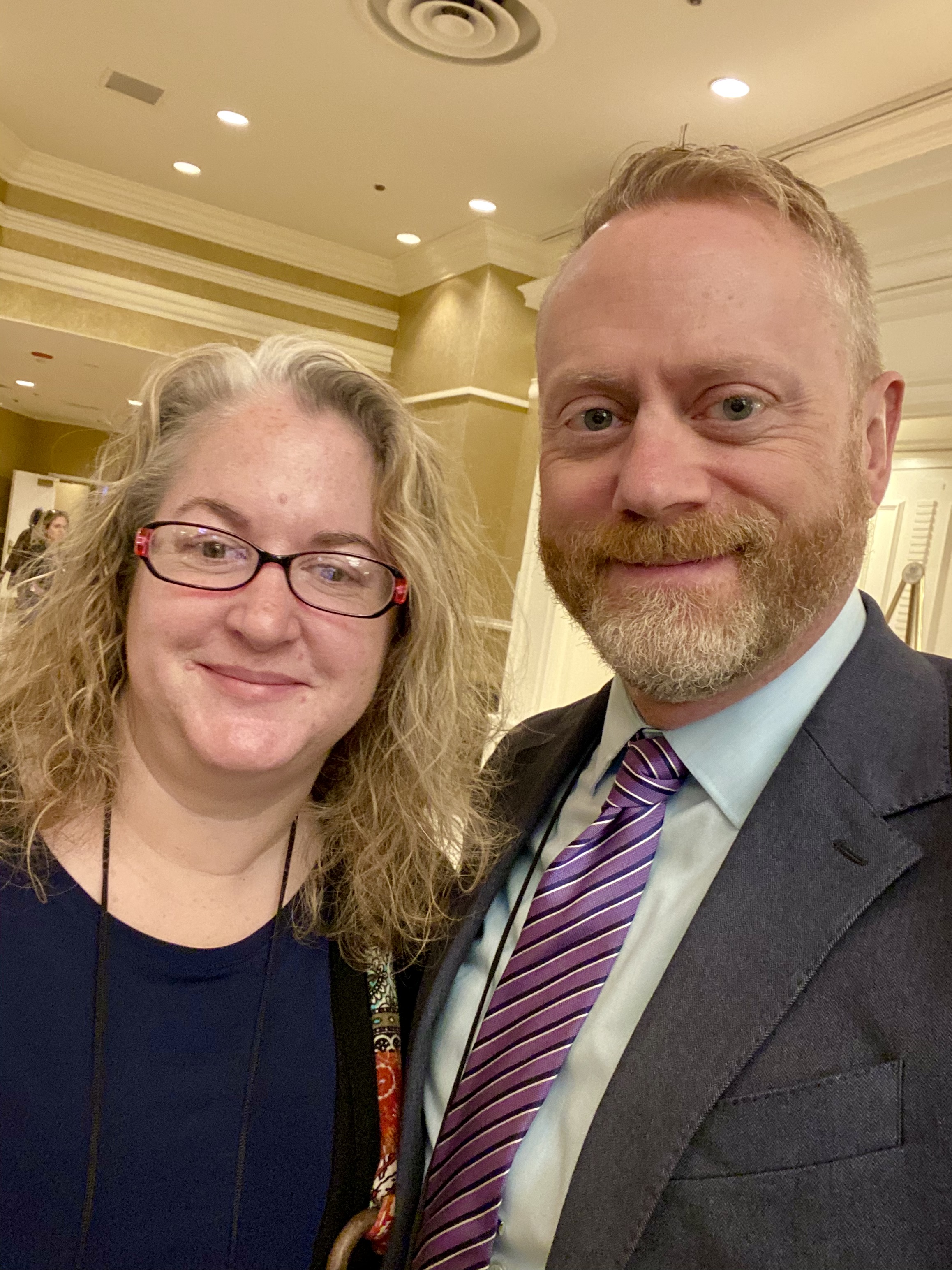
My research aims to understand and improve teaching, learning, and participation in inquiry-based learning (IBL) environments in medical education and to determine the appropriate educational technologies to meet their needs and goals. I use IBL as an umbrella term to include case-based learning (CBL), problem-based learning (PBL), and team-based learning (TBL). I achieve this by examining the literature, as well as practices and experiences of learners, educators, and scholars with/in IBL activities and integration of educational technologies.
ORCID: https://orcid.org/0000-0001-6765-4015
Google Scholar: https://scholar.google.com/citations?view_op=list_works&hl=en&user=7AqCy2IAAAAJ
 Max Anderson, PhD